Dutch travellers took 3.4 million holidays with friends in 2025, about one in six trips abroad. They are also, by some distance, the trips most likely to be talked about for a year and never booked.
The reason is never the destination. It is that a group of six has a different problem from a couple: somebody has to go first, and going first means committing money on behalf of people who have not answered yet. So this guide is built around that, not around a ranking. Pick the mood the group is in, get a city that suits it, and then deal with the four or five practical things that only bite when there are more than four of you.
The good news on money: a city holiday abroad cost Dutch travellers an average of €891 per person in 2025, and a short two-to-five-day trip €501. Friend-group holidays came in below the overall average, at €1,140 against €1,282, almost entirely because groups share what they sleep in.
- Big nights01. Berlin
- Big nights02. Belgrade
- Big nights03. Warsaw
- Food first04. Bologna
- Food first05. Lisbon
- Food first06. Thessaloniki
- Low-effort culture07. Valencia
- Low-effort culture08. Gdańsk
- Low-effort culture09. Antwerp
- Cheap and cheerful10. Sofia
- Cheap and cheerful11. Bucharest
- Cheap and cheerful12. Vilnius
For the group that wants big nights
The thing that ruins a night out with eight people is not the venue. It is the getting home: one taxi that fits four, a night bus nobody can find, and two people who left an hour ago. These three cities solve that before you arrive.
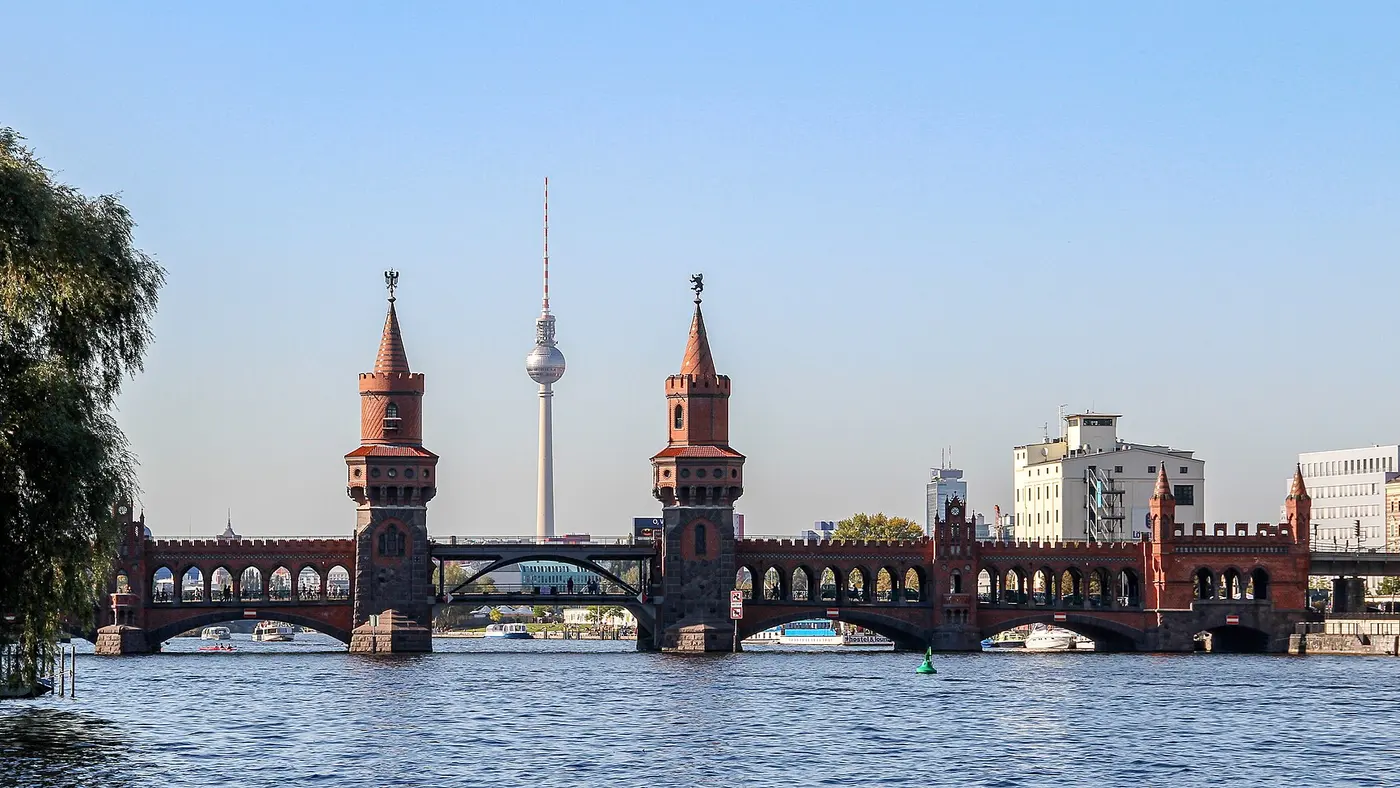
Berlin · Germany
Big nightsThe obvious answer, and still the right one. Berlin is the only city on this list where the night genuinely does not have a closing time, and where the transport keeps up with it.
- Street Food Thursday at Markthalle Neun, Eisenbahnstraße 42/43 in Kreuzberg. Every Thursday 17:00 to 22:00, running since 2013, walk-in only, so eight people never need a table booking.
- Mauerpark on Sunday. Flea market since 2004, plus the Bearpit Karaoke in the amphitheatre on Sunday afternoons from spring into late autumn. Free, and the single best hangover activity in Europe.
- Tempelhofer Feld: 355 hectares of former airport, open to the public since May 2010. Free. Bring a bag from the Späti and take the runway.
Group catch: Berlin clubs are the opposite of group-friendly. Berghain's door is famously strict and opaque, and phone cameras get a sticker over them at the entrance. Arrive in pairs, spread out, and have a plan B. And the city's noise law bans disturbing noise between 22:00 and 06:00, which includes your rental balcony.
Belgrade · Serbia
Big nightsThe cheapest big night in Europe, and the one with the most unusual venues: floating clubs moored on two rivers, and a 400-metre street of live brass bands.
- Skadarlija. The bohemian quarter: Skadarska street is under 400 m long, car-free, lined with kafanas including Tri šešira, founded in 1864, with brass bands playing between the tables. It takes up to 20,000 visitors a day, so eight is nothing.
- The splavovi: floating raft clubs and cafés along both banks of the Sava, around Ada Ciganlija and on the Danube's right bank. Each raft is its own venue, so a group can move without a queue.
- Belgrade Fortress and Kalemegdan Park, where the Sava meets the Danube. The city's most-visited sight, free, and the obvious place to start the evening.
Group catch: The stag-party reputation is real and documented: cheap alcohol plus thin enforcement of nightlife rules. A loud group of eight will be read as exactly that, and priced accordingly. Behave like guests and Belgrade is extraordinarily warm.
Warsaw · Poland
Big nightsUnderrated, and the best value in the EU for a group. Warsaw has rebuilt its old power station and its 1906 market hall into food-and-drink complexes that swallow a group of eight without a booking.
- Hala Koszyki, ul. Koszykowa 61/63. A market hall built between 1906 and 1909, rebuilt and reopened in October 2016, now more than a dozen restaurants and bars under one roof.
- Elektrownia Powiśle, ul. Dobra 42. The former power station, reopened in May 2020 with roughly 18,000 m² of food and retail.
- The Bulwary Wiślane, the Vistula boulevards. The first stretch opened in August 2015 and it is free, open-air and lined with bars all summer.
Group catch: Apartments are where groups get caught here. Polish quiet hours run from 22:00 to 06:00, buildings can write their own rules on top, and central Warsaw flats sit in ordinary residential blocks rather than tourist buildings. One noise complaint can end the booking.
For the group that eats first and plans later
The best structure for a group weekend is a food hall or a market: no reservation for eight, no single menu everyone has to agree on, and a natural place to meet when half the group wanders off.
Bologna · Italy
Food firstItaly's food capital, and the most weather-proof city on this list. Bologna has more than 38 km of porticoes inside the historic centre alone, UNESCO-listed since 2021, so rain never cancels the plan.
- Osteria del Sole, Vicolo dei Ranocchi 1/D. Documented since 1465, it serves only wine and beer and no food at all: you bring your own to the shared wooden tables. Monday to Saturday 11:00 to 21:30, Sunday from noon, and they take table bookings by phone.
- Mercato delle Erbe, Via Ugo Bassi 23. A covered market designed in 1910 and restructured in 2014, now stalls plus restaurants and wine bars, which is exactly the format a group needs.
- The Portico di San Luca: the longest portico in the world, 666 arches over 3,796 m uphill from Porta Saragozza. Free, and the walk that earns the dinner.
Group catch: The rooms are small and they close early. Osteria del Sole shuts at 21:30 and sells no food and no soft drinks at all, so it cannot carry a whole evening for eight, and anyone not drinking gets nothing. Treat it as the first stop, not the plan.
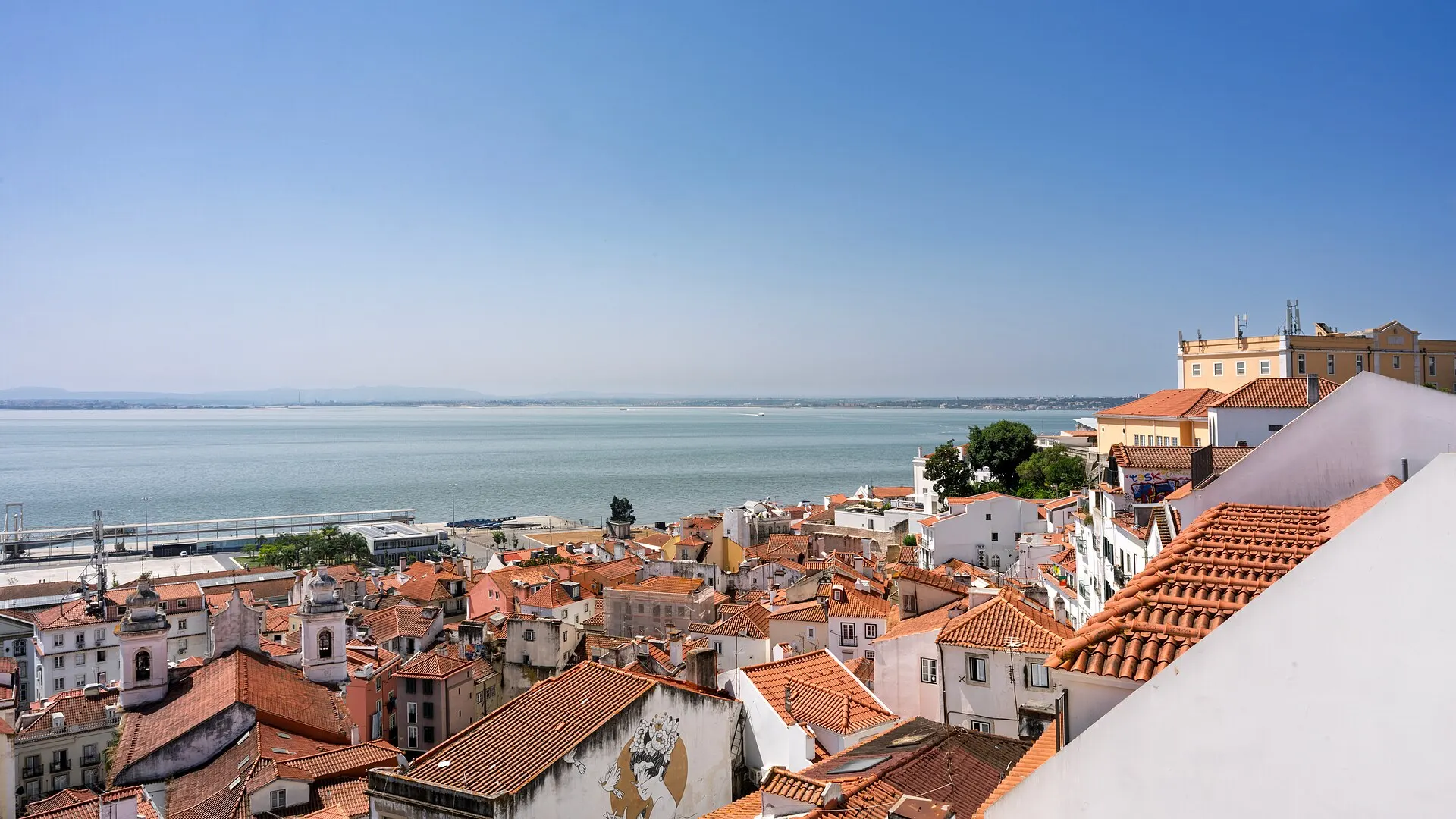
Lisbon · Portugal
Food firstOne district does everything. Cais do Sodré puts the food hall, the bar street and the ferry terminal within a few hundred metres of each other, which is the closest thing to a cheat code for a group weekend.
- Time Out Market in the Mercado da Ribeira. Open since May 2014 with around 36 kiosks: Sunday to Wednesday 10:00 to midnight, Thursday to Saturday to 02:00. No reservations, communal tables, everyone eats what they want.
- Pink Street (Rua Nova do Carvalho), painted pink in a city-backed scheme in 2011 and levelled with the pavements in 2013 to make room for terraces. Pensão Amor and Music Box are the anchors.
- LX Factory in Alcântara: a 23,000 m² industrial complex dating from 1846, reopened in 2008 as a quarter of shops, cafés and restaurants under the bridge.
Group catch: Time Out Market takes no reservations and seats you at communal tables, so eight people will not sit together at peak time. Eat at 18:30, or send two ahead to hold a corner.
Thessaloniki · Greece
Food firstGreece's eating city, and the cheapest logistics of the twelve. Flat, walkable, and with the market, the warehouse district and the old town within twenty minutes of each other.
- Ladadika, next to the port. The old olive-oil warehouse district, heritage-listed in 1985, now bars and tavernas inside converted 19th-century warehouses.
- Kapani (Vlali), just west of Aristotelous Square. The oldest traditional market in the city, fishmongers and greengrocers next to old kafeneia, with roots in the late 15th century.
- Ano Poli, the upper town around the acropolis and the Eptapyrgio fort, largely spared by the great fire of 1917. A free uphill walk with the whole gulf at the end of it.
Group catch: Thin direct cover: two carriers, one of them seasonal and twice a week. A group of eight that books late ends up split across connections or across days, which is the one thing that actually kills these trips.
For the group that wants culture without a schedule
Nobody in a group of six wants a timed ticket at 10:15. These are cities where the good stuff is a district, a market or a park rather than a queue, so people can drift off and rejoin without anyone missing a slot.
Valencia · Spain
Low-effort cultureA city with a beach at one end and a dry riverbed turned into a nine-kilometre park running through the middle. Cheaper than Barcelona, half the crowds, and everything is flat enough to cycle.
- The Turia Garden: 136 hectares laid out in the old river bed, running nearly 8.5 km across the city. Rent bikes at one end and you have the day sorted.
- The City of Arts and Sciences, Calatrava's white complex at the eastern end of that park. Worth the walk even if nobody goes inside anything.
- Mercado Central, opposite the Llotja de la Seda: one of the great works of Valencian Art Nouveau, and lunch for eight without a booking.
Group catch: Paella is the local religion and the tourist strip near the beach is where it goes wrong. Eat it at lunch, inland, and never after dark: locals do not, and a restaurant serving it at 21:00 is telling you who it is for.
Gdańsk · Poland
Low-effort cultureA rebuilt Hanseatic old town on the Baltic, with a serious modern museum and a beach resort twenty minutes up the train line. Very cheap, very underrated for a group.
- Długi Targ, the Long Market between Ulica Długa and the Green Gate: the postcard street and the heart of the Royal Route.
- The European Solidarity Centre, open since August 2014 on the old shipyard site: the story of Solidarność told properly, and the best hour of history you will get on a weekend.
- Sopot, the Baltic resort between Gdańsk and Gdynia, on the local train line: pier, beach and bars, and a change of scene without a car.
Group catch: Gdańsk and Sopot have both picked up a stag-weekend reputation, and Sopot's Monte Cassino strip is where it concentrates. A group of eight in matching anything will be priced and policed accordingly.
Antwerp · Belgium
Low-effort cultureThe one on this list that needs no flight at all. Just over an hour by direct train, and a city that does fashion, art and beer with more swagger than Brussels.
- The MAS in the Eilandje docklands, open since May 2011 and the largest museum in Antwerp. The rooftop walk up through the building is free.
- Het Zuid: the southern quarter that revived in the mid-1980s, now Art Nouveau and modernist streets full of cafés, restaurants and three museums.
- Antwerpen-Centraal itself, which is worth ten minutes as architecture before you even leave the platform.
Group catch: The one genuinely expensive city in the second half of this list, and the beer is stronger than it tastes. Two Belgian tripels are four normal beers, which groups discover at about 23:00.
For the group where money is the deciding factor
When somebody in the group is saving for something else, this is the tier that keeps them in. A meal out costs what two coffees cost in Amsterdam, so nobody has to sit anything out.
Sofia · Bulgaria
Cheap and cheerfulThe cheapest capital in the EU, with a 2,290-metre mountain on the tram line. Sofia is where a group of eight can eat and drink properly for three days on what one night in Amsterdam costs.
- Vitosha, the mountain massif on the edge of the city, reachable by bus and cable car: hiking in summer, skiing in winter, and the reason Sofia does not feel like a flat capital.
- Boulevard Vitosha, the pedestrian spine, for the walk that ends in dinner.
- The Central Mineral Baths and the market halls around them: the city's hot springs are still free to fill a bottle from, and the halls next door are lunch.
Group catch: Taxis are the classic Sofia trap for arriving groups. Use the metro from the airport, or an app, and never a car that approaches you in the arrivals hall.
Bucharest · Romania
Cheap and cheerfulBig, loud, and far more fun than its reputation. Bucharest has the cheapest nights on this list and an old town built entirely around going out.
- Lipscani, the old town: the most important commercial district in the city from the Middle Ages to the 19th century, and now a dense grid of bars and terraces next to the ruins of the old Princely Court.
- The Palace of the Parliament, which needs no introduction and rewards a guided hour.
- Therme București north of the city: a vast thermal complex, and the correct answer to a Sunday after a Saturday.
Group catch: Lipscani after midnight is a promoter's marketplace, and clubs there quote a very different price to a group of eight foreigners than to four locals. Agree what you are paying before you go in.
Vilnius · Lithuania
Cheap and cheerfulThe quiet one, and the most charming. A baroque old town that is one of the largest surviving medieval centres in northern Europe, plus a self-declared artists' republic across the river.
- The Old Town: UNESCO-listed, 3.59 km² across 74 quarters and 70 streets, and small enough to cross on foot in twenty minutes.
- Užupis, just over the Vilnia river: an artists' quarter with its own constitution nailed to a wall, and the best beer terraces in the city.
- Halės market and the streets around it for lunch, then the hill at Gediminas Tower for the view that explains the layout.
Group catch: It is genuinely quiet on a Sunday and in winter it gets dark by four. Vilnius rewards a group that wants long dinners and long conversations, not one that wants a queue outside a club at midnight.
The rules nobody warns a group about
A couple can book almost anything. A group of six runs into a set of rules that only exist because of groups, and they have tightened sharply in the last two years. These are the ones worth knowing before somebody clicks book.
Your apartment probably has a people limit
- Amsterdam is the strictest in Europe: holiday rentals need a permit and a registration number in every advert, are capped at 30 nights a year, and may host a maximum of four people at a time. Anything advertised for more than four is illegal, so six friends need two rentals or a hotel.
- Berlin requires a permit for renting out a whole flat, and every listing must show a 17-character registration number. Second homes are generally approved for at most 90 tourist nights a year.
- Lisbon has stopped issuing new short-let registrations across 19 neighbourhoods in eight parishes, including Santa Maria Maior, Misericórdia and Arroios.
- Barcelona is going further: in June 2024 the mayor announced that all 10,101 tourist-apartment licences will be withdrawn by November 2028.
- Prague brought private rentals into the national eTurista register from May 2026, with fines up to 100,000 CZK for not registering.
The practical version: check the listing for a registration number and a stated maximum occupancy, and take "sleeps 8" on a photo caption as marketing rather than permission.
The tourist tax is now a real line in the budget
Per person, per night, on top of the room. It adds up fast across a group of eight and three nights.
| City | Tourist tax | Notes |
|---|---|---|
| Amsterdam | 12.5% of the room price | The highest in Europe; the incoming coalition plans to raise it in steps toward 20% by 2031 |
| Barcelona | €9.50 on a holiday let, €12 in a five-star hotel | From 1 April 2026; capped at seven consecutive nights, under-17s exempt |
| Berlin | 7.5% of the net room price | Since 1 January 2025, excluding breakfast and extras |
| Vienna | 5% | Rising from 3.2% on 1 July 2026, and to 8% on 1 July 2027 |
| Lisbon | €4 flat | Doubled from €2 on 1 September 2024 |
| Prague | 50 CZK flat | The statutory maximum a Czech municipality may charge |
Flights: "group" starts later than you think
Everyone assumes a group booking is cheaper. Mostly it is just different: one fare for everybody, and softer rules on names and cancellation. The thresholds vary more than the fares do.
- KLM treats 10 or more as a group, quoted through its group desk, with one fare for all and flexible payment.
- Ryanair starts at 15, wants payment in full at booking, all names seven days before departure, and charges €50 per person per sector for changes after that.
- Wizz Air starts at 16, gives everyone one fixed fare, and lets you add up to 10% more people later at the same price. Group fares exclude baggage.
- easyJet lets up to 40 people book straight off the website, but all names are needed at booking and the whole thing goes on one card.
- Transavia quotes through a group tool, with free name changes up to five working days before departure.
Splitting the money without three weeks of chasing
One person fronts the big shared costs, everyone settles once at the end. That is it. Two practical limits worth knowing if you are settling in euros from the Netherlands:
- Tikkie caps a single payment request at €950, and you can receive at most €2,500 per request and €2,500 in any 24 hours. A €1,400 apartment cannot go out as one Tikkie, so split it before you try.
- Revolut Group Bills has no fee at the moment and lets people without a Revolut account pay by link, but Revolut itself is explicit that it is an expense-tracking tool and not a regulated payment service. Treat it as the spreadsheet, not the bank.
Whatever you use, log the spending as it happens. Reconstructing four days of rounds on the flight home is how friendships develop small permanent cracks.
Making it happen in one afternoon
Once the dates are fixed, the whole thing is a to-do list: flights, one place to sleep, a rough plan for two evenings and one long lunch. What kills it is doing that in a group chat, where every decision scrolls out of sight within an hour.
That is exactly what Guidesty is for. One shared plan everyone can edit, a map with the stops on it, a budget that works out who owes whom, and a vote for the moments when half the group wants the market and half wants the museum. No accounts, free while we are in beta, and the AI drafts the first version so you are editing instead of staring at an empty weekend.
City trips with friends: FAQ
What is the best European city for a trip with friends?
It depends on what the group is actually after, which is why this guide sorts by mood. For a first group trip from the Netherlands, Lisbon, Warsaw and Thessaloniki are the safest picks: cheap rounds, walkable centres, and enough going on that nobody needs a plan for every hour.
How many people is too many for a city trip?
Six is the natural ceiling for one apartment in most cities, and eight is where restaurants start saying no without a booking. Above eight, split into two accommodations within walking distance of each other and accept that you will not all eat together every night.
How much does a city break with friends cost?
Dutch statistics give a useful benchmark: a city holiday abroad averaged 891 euro per person in 2025, and a short two to five day trip averaged 501 euro per person. Friend-group holidays came in at 1,140 euro per person on average, below the 1,282 euro average for all holidays abroad, mostly because groups share accommodation.
Can six friends book one Airbnb in Amsterdam?
No. Amsterdam caps holiday rentals at four people at a time, requires a permit and a registration number in every advertisement, and limits rentals to 30 nights a year. Accommodation advertised for more than four people is illegal, so a group of six needs two rentals or a hotel.
What is the easiest way to split costs on a group trip?
Agree on one person who pays for the big shared items, then settle once at the end rather than after every round. Note the Dutch limits if you use Tikkie: a single payment request maxes out at 950 euro, so a 1,400 euro apartment has to be split across several requests. Tracking it in a shared plan as you go beats reconstructing it on the flight home.
Prices, taxes and rules verified in August 2026 and labelled with their year; they change, so check before you book. Beer and meal prices are Numbeo city averages from August 2026. Spending figures are from CBS StatLine (Dutch holidays abroad, 2025). Some links in this guide are affiliate links (Booking.com, GetYourGuide): you pay the same price and they keep Guidesty free. Photos via Wikimedia Commons: Alfama rooftops, Lisbon: Dale Cruse (CC BY 4.0) · Oberbaumbrücke, Berlin: Dietmar Rabich (CC BY-SA 4.0).